It is one of Zimbabwe’s hot days in the Masoka community of Mbire District.
Located in Zimbabwe’s lower Zambezi Valley, Mbire District experiences hot and dry conditions for much of the year. Temperatures rise sharply between September and November, often exceeding 35°C and at times surpassing 40°C.
Under the scorching heat, ten members of the Masoka community are busy installing a 22 km elephant- and predator-proof fence as part of efforts to address human–wildlife conflict. They have taken full ownership of the project, and the heat is not even a concern to them.
“So far, where we have installed the fence, people are sleeping peacefully. Before, they had sleepless nights because of animals,” said Newwork Dzomba, one of the community members selected to be part of the fence installation team.
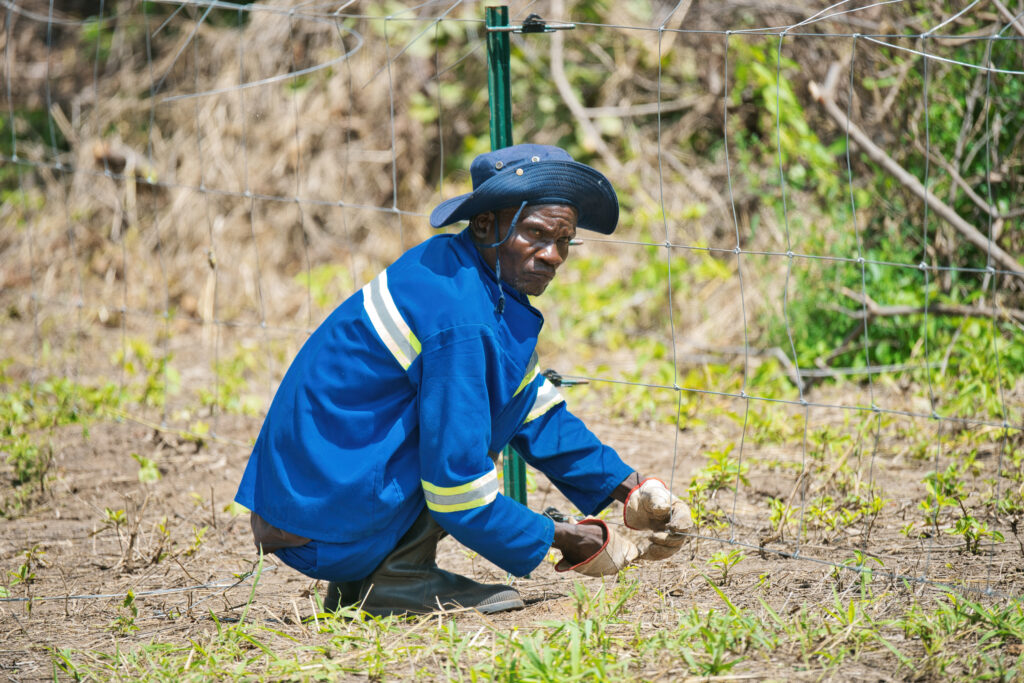
In March 2026, the Chewore Conservation Trust (CCT), implementing partner of the Awe for Nature Foundation, began installing the 22 km elephant- and predator-proof fence around the Masoka community. This intervention came following the realisation that the community had been incurring annual crop and livestock losses of approximately USD 300,000 due to human–wildlife conflict. The community itself proposed the installation of a porcupine fence as a lasting solution.
“We are grateful as ZimParks that this work, undertaken in partnership with CCT, is firmly in line with Zimbabwe’s re-engagement agenda,” said Professor Patience Gandiwa, Director of International Conservation Affairs at the Zimbabwe Parks and Wildlife Management Authority (ZimParks).
How the Fence Works
Installation began at a site along a key elephant corridor – the priority entry point for animals moving into the community.
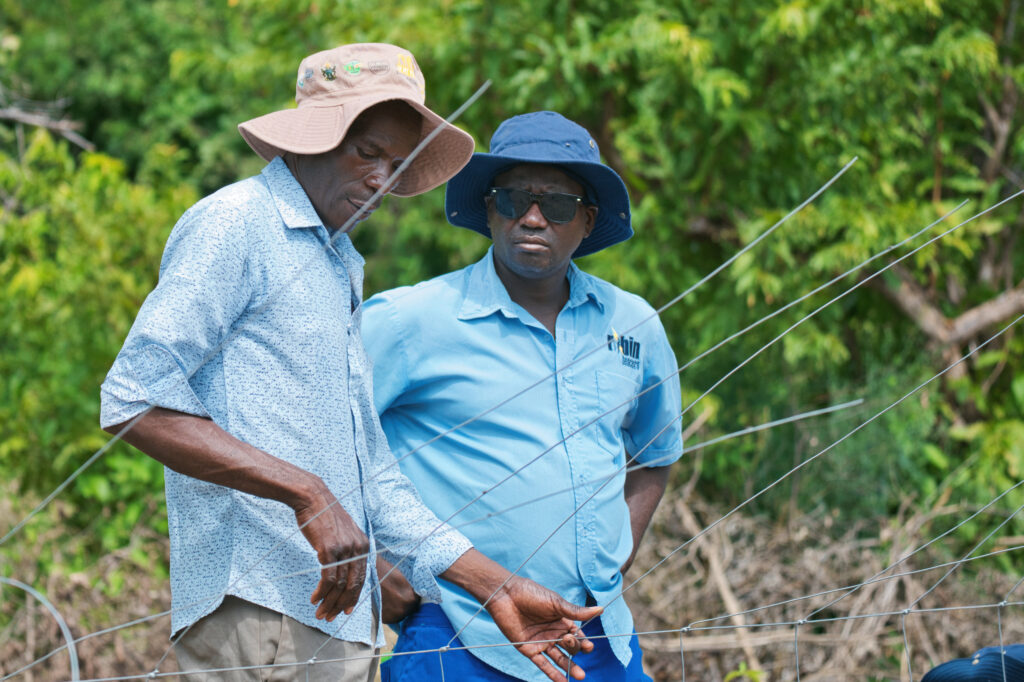
“We have now installed 8 km of fencing from the starting point,” said Martin Sande, Chief Installer at Robin Fencers. “This type of fence is known as a porcupine fence, named after the design of its hanging wires. It is built primarily for large animals like elephants.”
The fence runs on a Direct Current (DC)-powered energiser connected to solar panels, which steps the voltage up from 12 volts to 10,000 volts. The shock is powerful enough to deter animals but will not kill them.
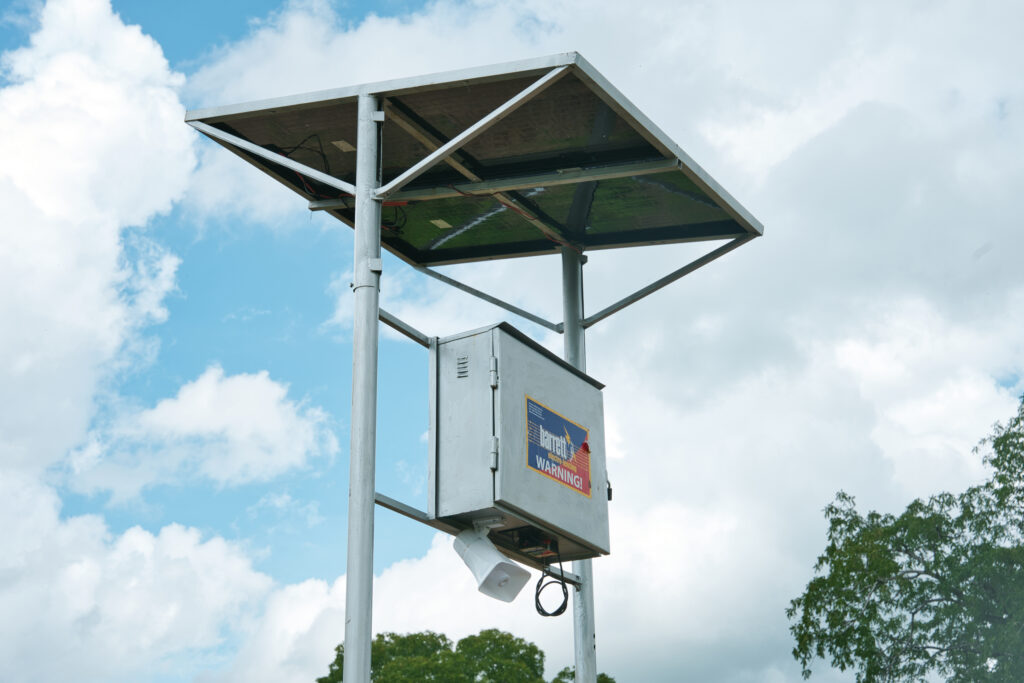
“We are currently using two 48,000-unit energisers capable of running 10 km of live wire,” Sande added.
Not the First Time – But This Time, It Must Last
This is not the first time the Masoka community has had a fence. A previous structure, installed in the 1990s, protected the community for nearly a decade.
“One was installed in the 1990s by another organisation – it was electrified and it helped us for many years until 2002,” said Promotion Dzomba, Masoka Ward Secretary and Village Head.
The years since have been marked by mounting losses. Promotion Dzomba is among those who have felt the impact most acutely.
“Sometimes you farm two acres and the harvest ends up being half an acre – the rest destroyed by animals. Once an animal enters a field, it is hard to chase away,” he said.

For Dzomba, 2025 was the worst year. Elephants devoured his entire sorghum harvest – one of the crop viable in this arid agro-ecological region, which receives just 450–650 mm of rainfall annually.
“As long as you have livestock, lions visit. Last year alone, I lost 11 goats to lion attacks – some in broad daylight. I am only left with two goats. For those with cattle and donkeys, the situation was even worse,” he said.
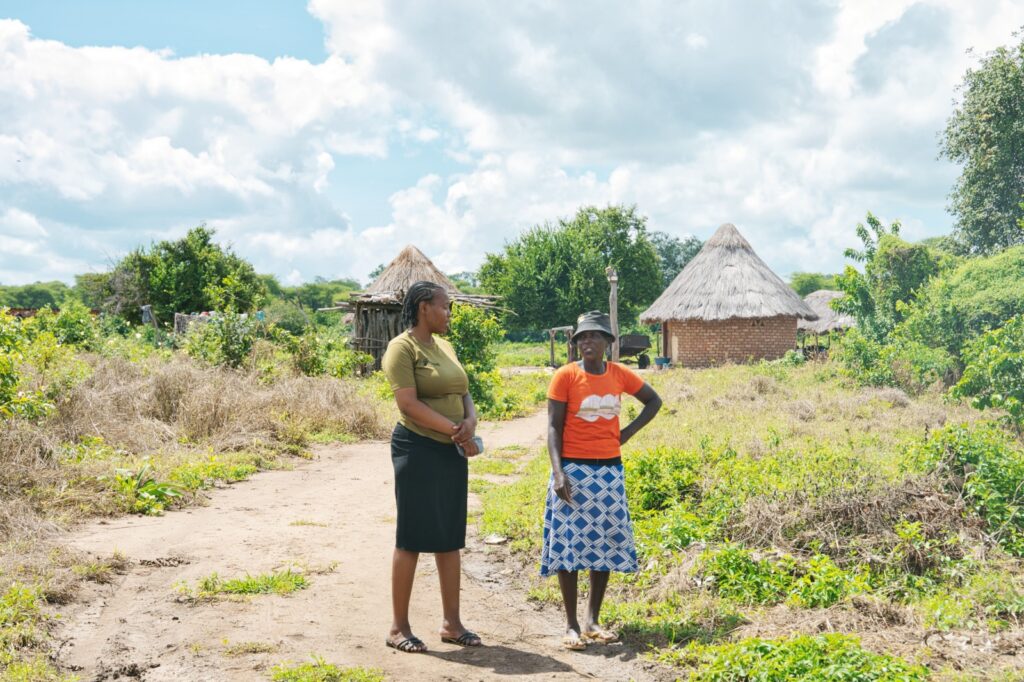
Dzomba is not alone. Stenzen Dzomba, a community member whose homestead sits near the newly installed section of fence, described years of losses to elephants, lions, and hyenas.
“Surviving this side was very difficult. Last year I lost a goat in broad daylight. I planted maize and elephants devoured the entire field,” she said, pointing to the kraal where a lion had attacked her livestock.
The fence has already begun to make a difference. “We heard the sound of an animal that failed to pass through – and we were shown the spoor of elephants that had tried,” Stenzen said. “Now I can sleep peacefully.”
Community Ownership at the Centre of the Project
“Right now, people are poor because they can no longer farm productively due to conflict. With this fence, we believe no one will vandalise it – we have all seen what wild animals do to our crops,” said Newwork Dzomba.
The community has taken full ownership of the project, with each village head allocated 1 km of fence to oversee throughout the year.
“The community is happy because of the fence installation underway. Whatever we are required to do as a helping hand, we are on standby – because we are the ones being helped,” said Dave Mhande, Masoka Village Headman.
Professor Gandiwa underscored the importance of that community commitment for the long-term success of the project.
“Projects like this do not come without risk. In every good project, there are retrogressive elements – but with strong leadership on the ground, in partnership with CCT, I know this one is in good hands,” she said.
Upon completion, the fence is expected to significantly reduce human–wildlife conflict, protecting crops and livestock while securing the livelihoods of Masoka’s residents.
“This is just the beginning. We are grateful to ZimParks for trusting us with the stewardship of this area – it is their support that has made our work with this community possible. Knowing that what we are doing is valued and appreciated is what keeps us going,” said AWE for Nature Foundation Founder and Chief Executive Chairman Michael Hacking.